The poem
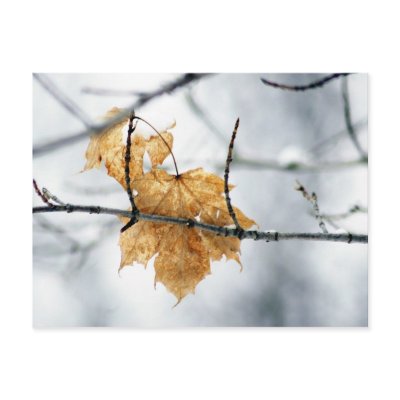
Fall, Leaves, Fall by Emily Jane Bronte relates to pretty much everything we've done in class lately. We discussed haiku poems that were about the end of a life, and displayed this through the changing of seasons. Emily Jane Bronte does the same as she describes leaves "fluttering from the autumn tree." (4) This shows the change from autumn to winter, which, as we discussed in class, represents the transition from middle age to old age and death. Also similar to the haiku poems is the tone in which this transition to death is discussed. The haiku's didn't discuss death in a fearful or sad way, and neither does this poem by Emily Bronte. The way she commands the leaves to "fall, leaves, fall" and the flowers to "die...away" shows that she has no fear, and the way "each leaf speaks bliss" shows joy in these changes. (1,3)
Bronte's poem also very obviously relates to Cormac McCarthy's novel because they both use nature to show a transition towards death. However, the views towards the disappearing nature and movement into death greatly differ. I don't think the man and the boy from
The Road would "sing when the night's decay/ushers in a drearier day" as they try to survive in a "world shrinking down about a raw core of parsible entities." (Bronte 7,8 McCarthy 88) But the same seasonal representatives are used in each case: winter is equal to death.
Despite the differences between the haiku poems, Bronte's poem, and McCarthy's novel, they all share a common usage of seasons as symbols which works perfectly in each case to reflect the writers intentions.

No comments:
Post a Comment